All TurkishRecipes
Unique dishes from every corner of Turkey — from Thrace to the Taurus Mountains
From the Turkish Table
Twelve dishes drawn from eight regions — each carrying centuries of technique, memory, and seasonal ritual passed through family hands.
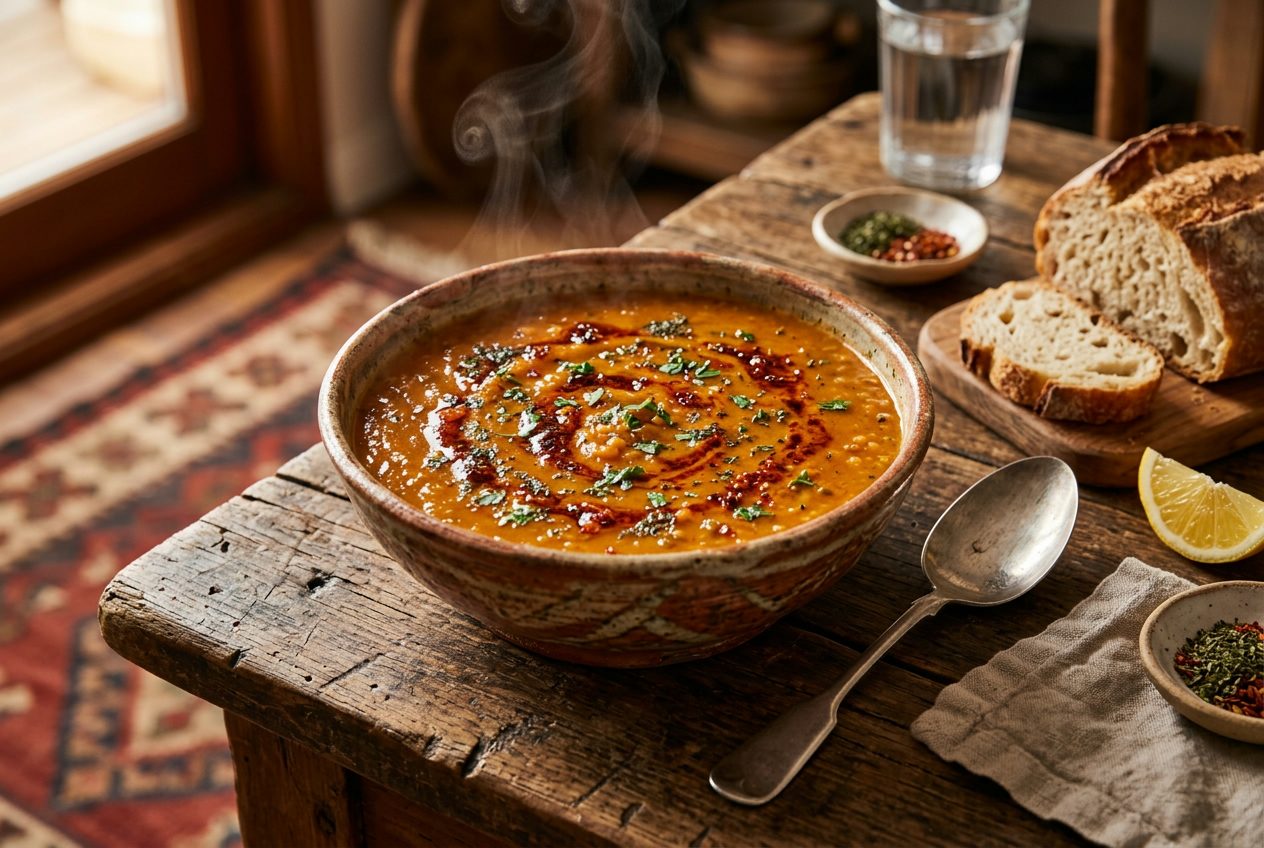
Mercimek Çorbası
A silky red lentil soup spiked with cumin and finished with a sizzling paprika-butter drizzle — Turkey's most beloved everyday comfort.
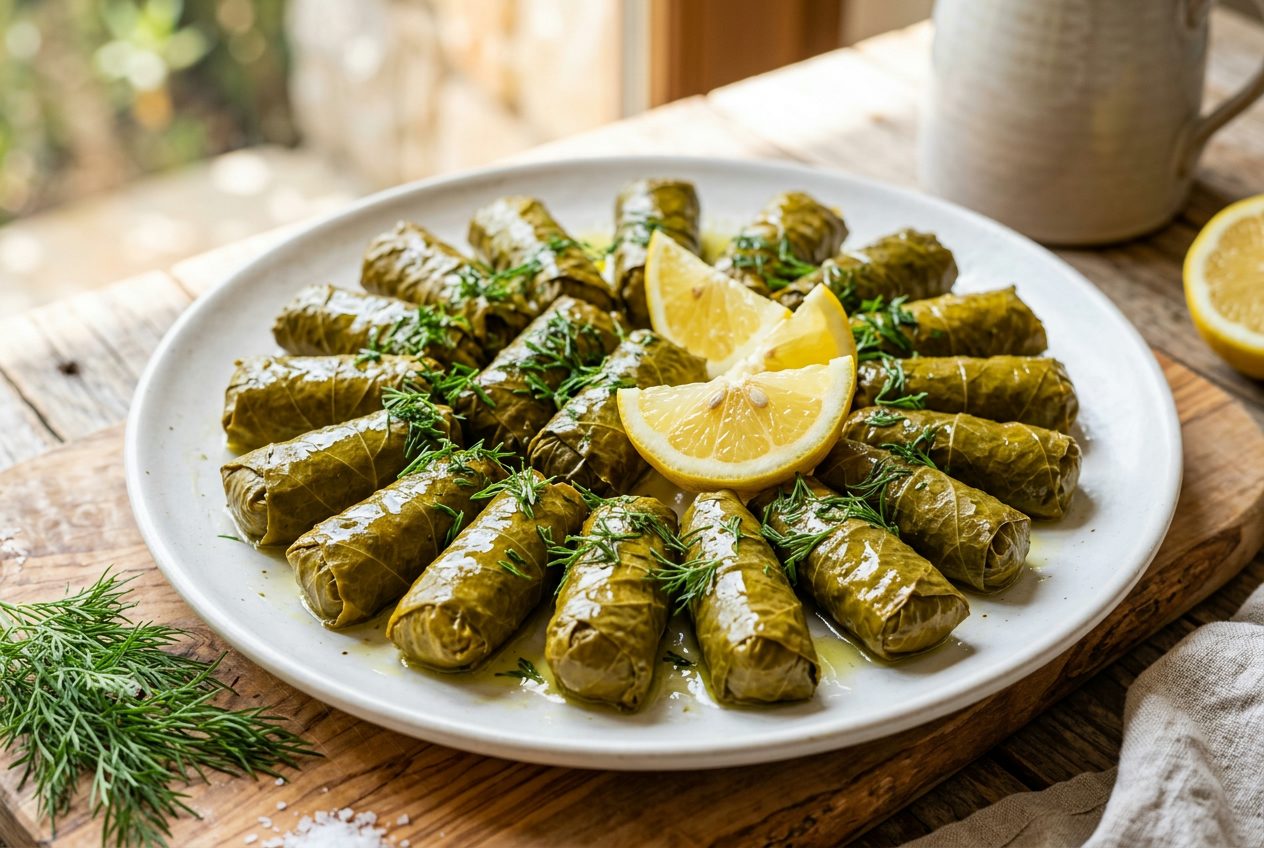
Zeytinyağlı Yaprak Sarma
Tender vine leaves wrapped around herbed rice and currants, braised slowly in olive oil — a meditative dish best eaten cool.
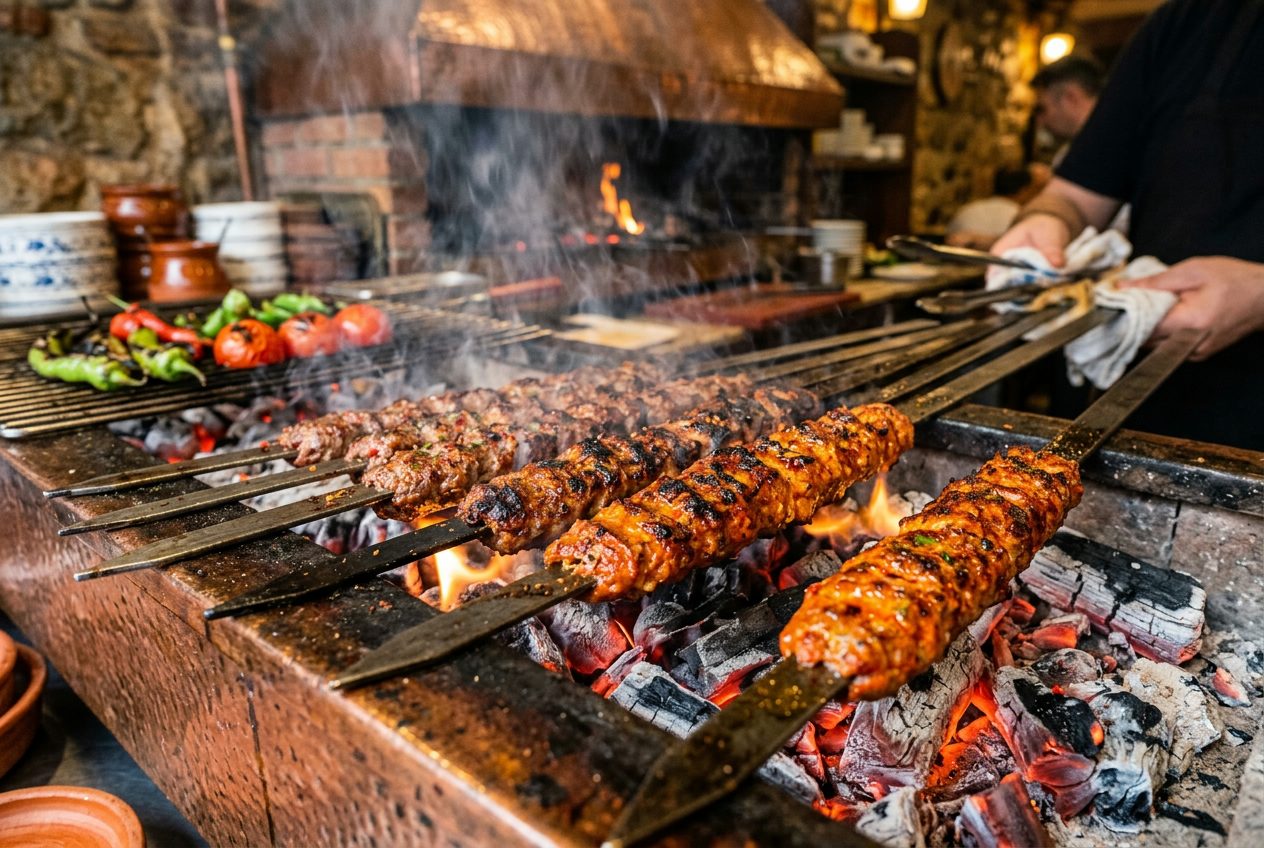
Adana Kebabı
Hand-minced lamb kneaded with tail fat and fierce red pepper, grilled on flat skewers over charcoal — the king of the southern grill.
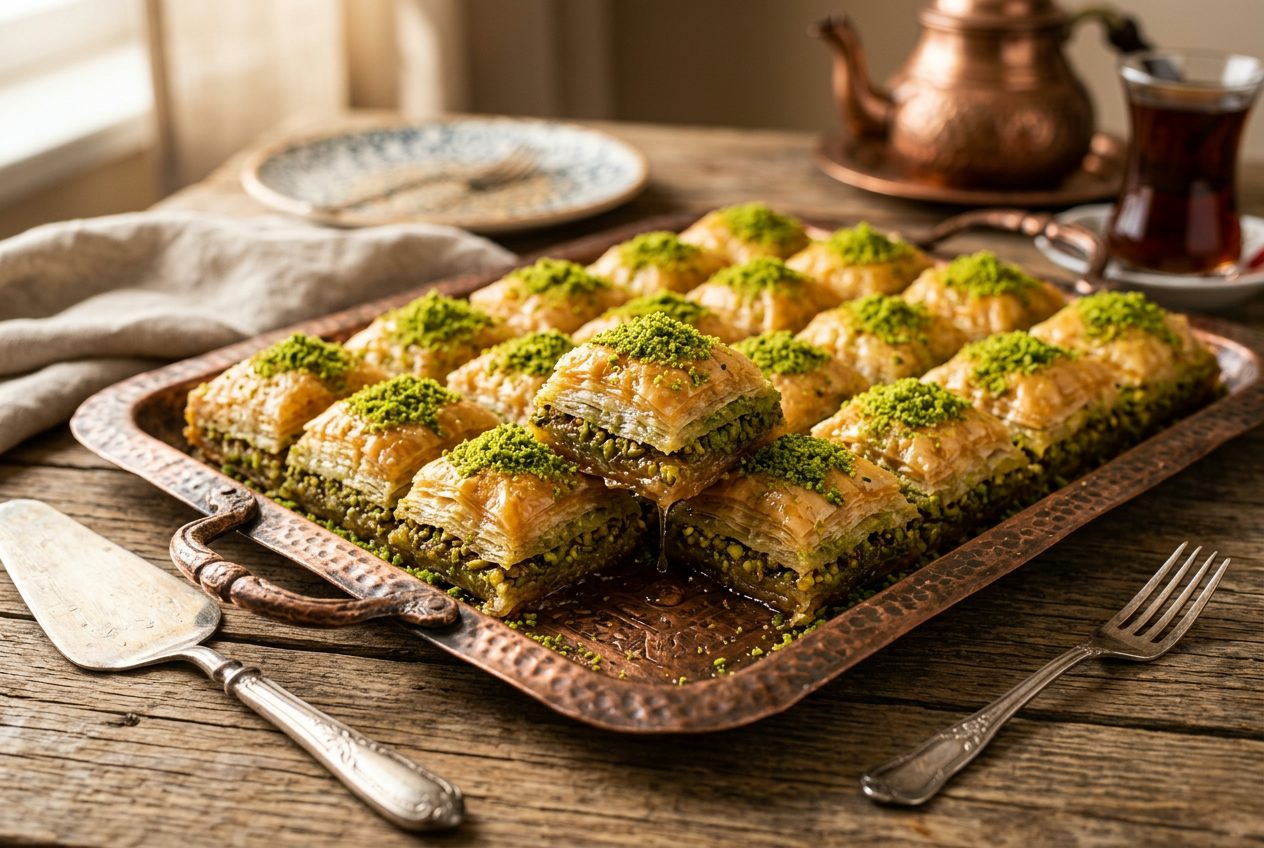
Antep Baklavası
Forty paper-thin layers of hand-rolled pastry filled with raw Antep pistachios and drenched in light sugar syrup — a UNESCO-recognised confection.
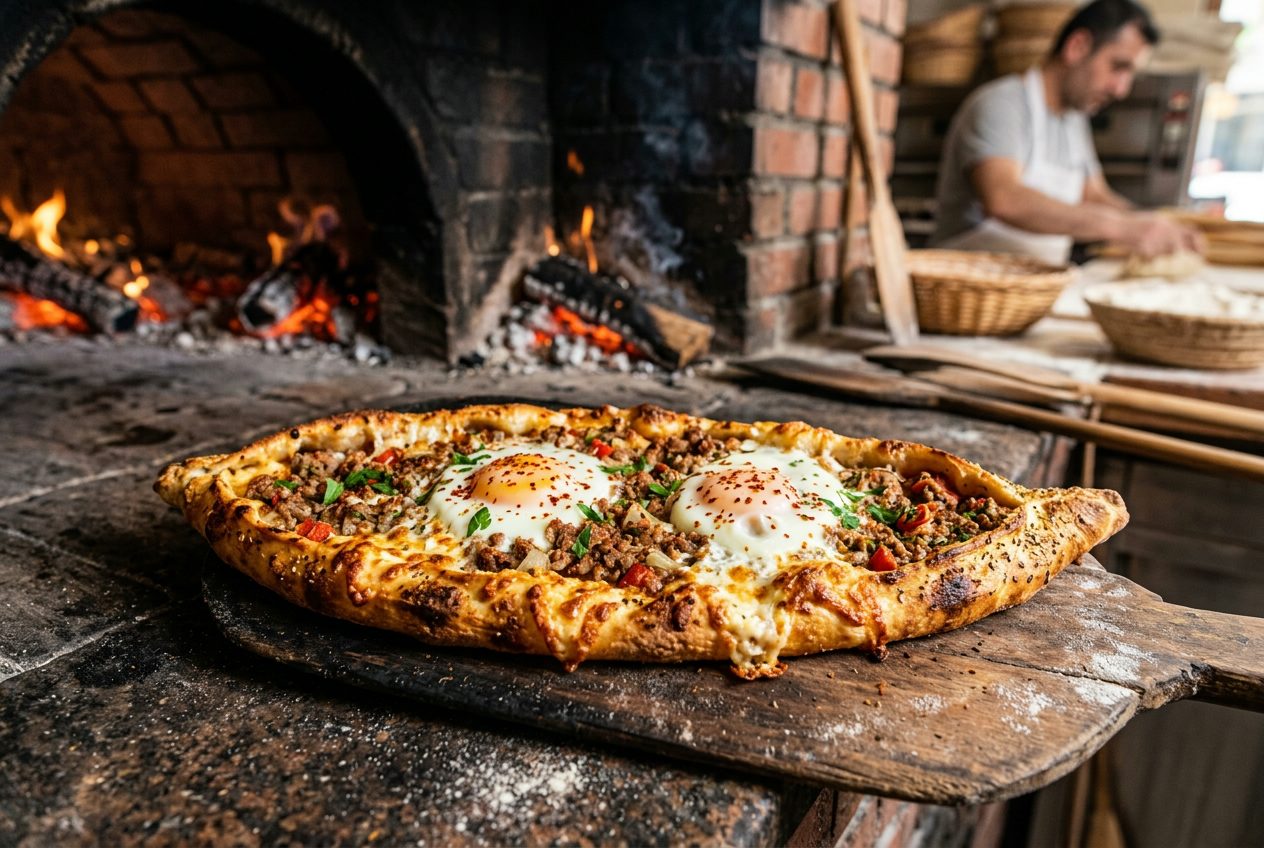
Karadeniz Pidesi
Boat-shaped flatbread from Trabzon's wood-fired ovens, loaded with spiced minced meat and cracked egg — irresistible from first bite.
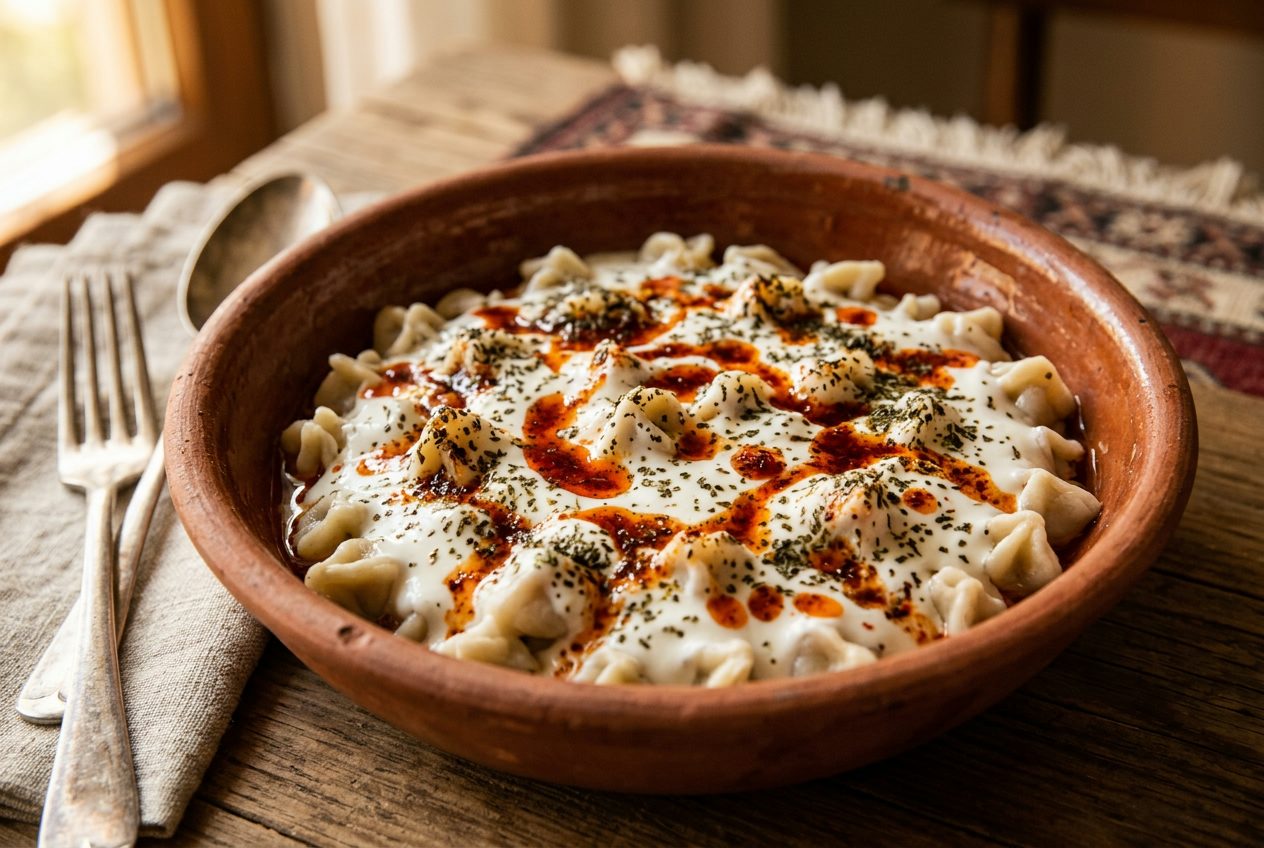
Kayseri Mantısı
Tiny hand-pinched dumplings filled with spiced lamb, drowned in garlic yogurt and scorching paprika butter — Turkey's answer to ravioli.
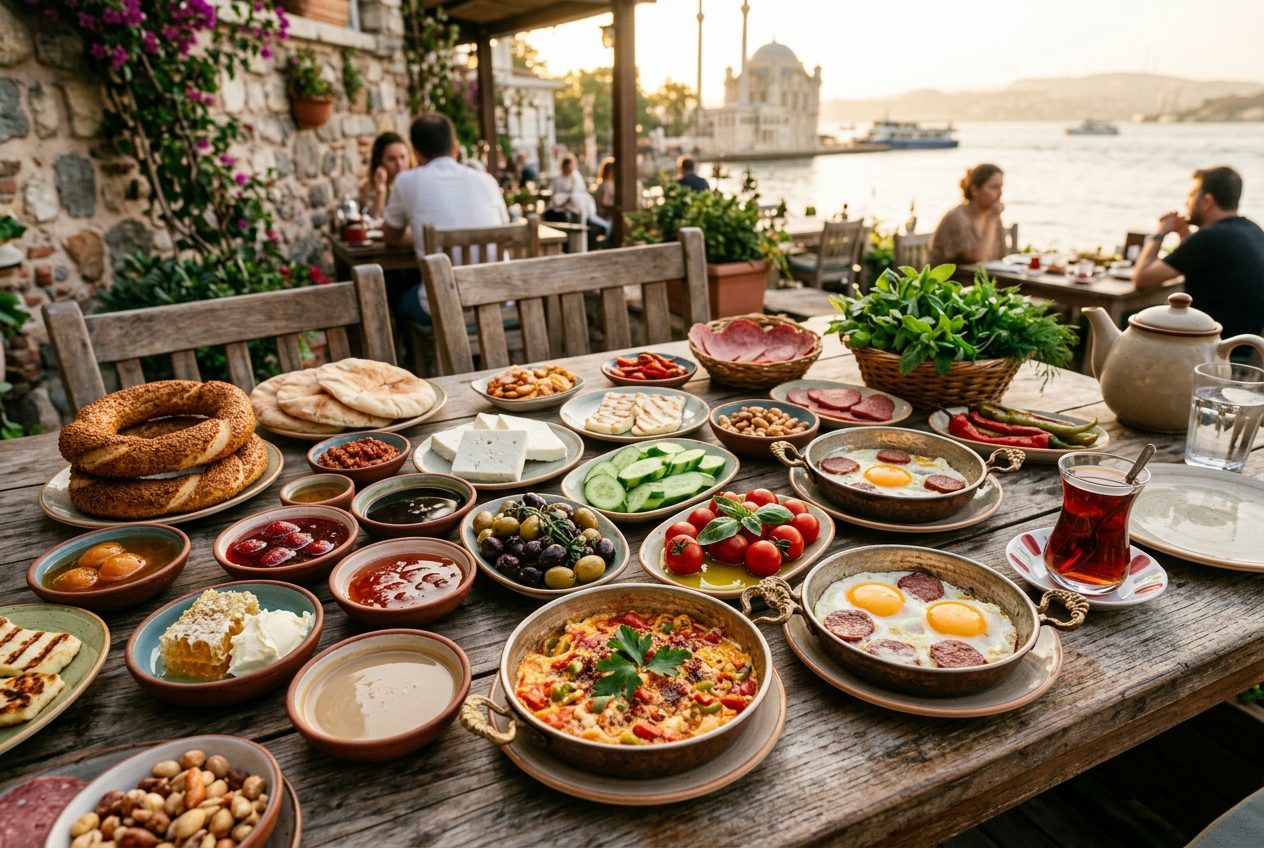
Serpme Kahvaltı
The legendary Turkish breakfast spread — a table covered in small dishes of cheese, olives, eggs, jams, and honey that could last all morning.
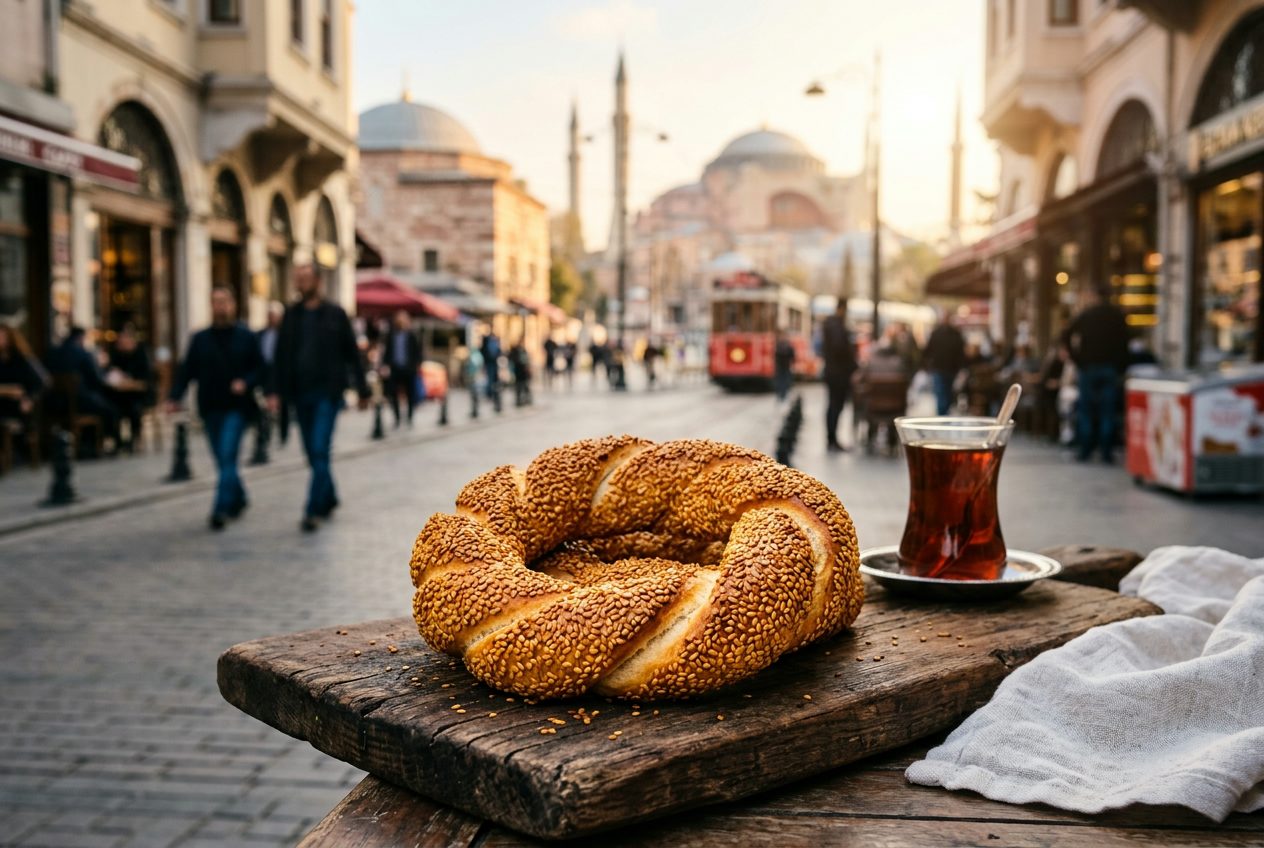
İstanbul Simiti
The iconic sesame-encrusted ring bread, dipped in grape molasses before baking — Istanbul's most democratic street food for five centuries.
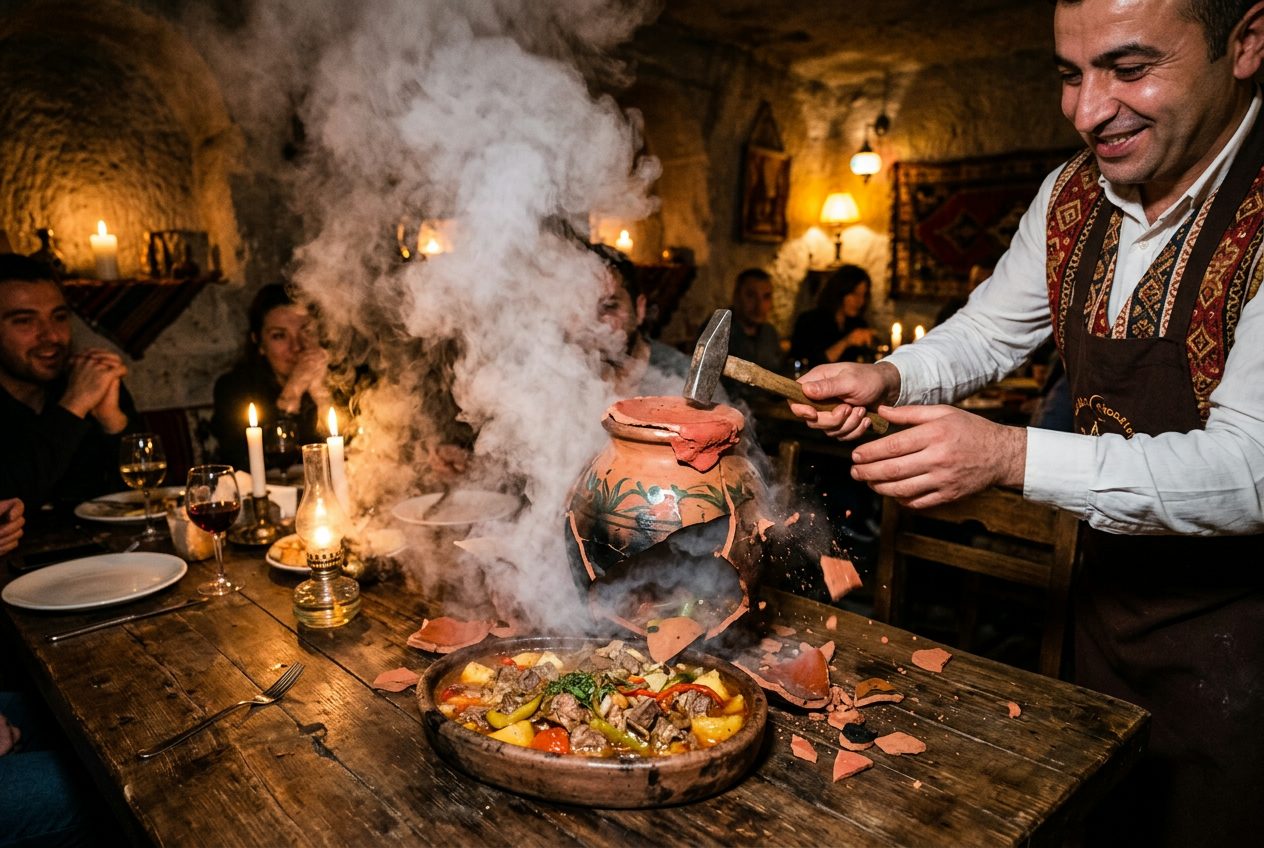
Testi Kebabı
Lamb and vegetables sealed inside a clay jug and slow-cooked for hours — opened dramatically at the table with a mallet blow.
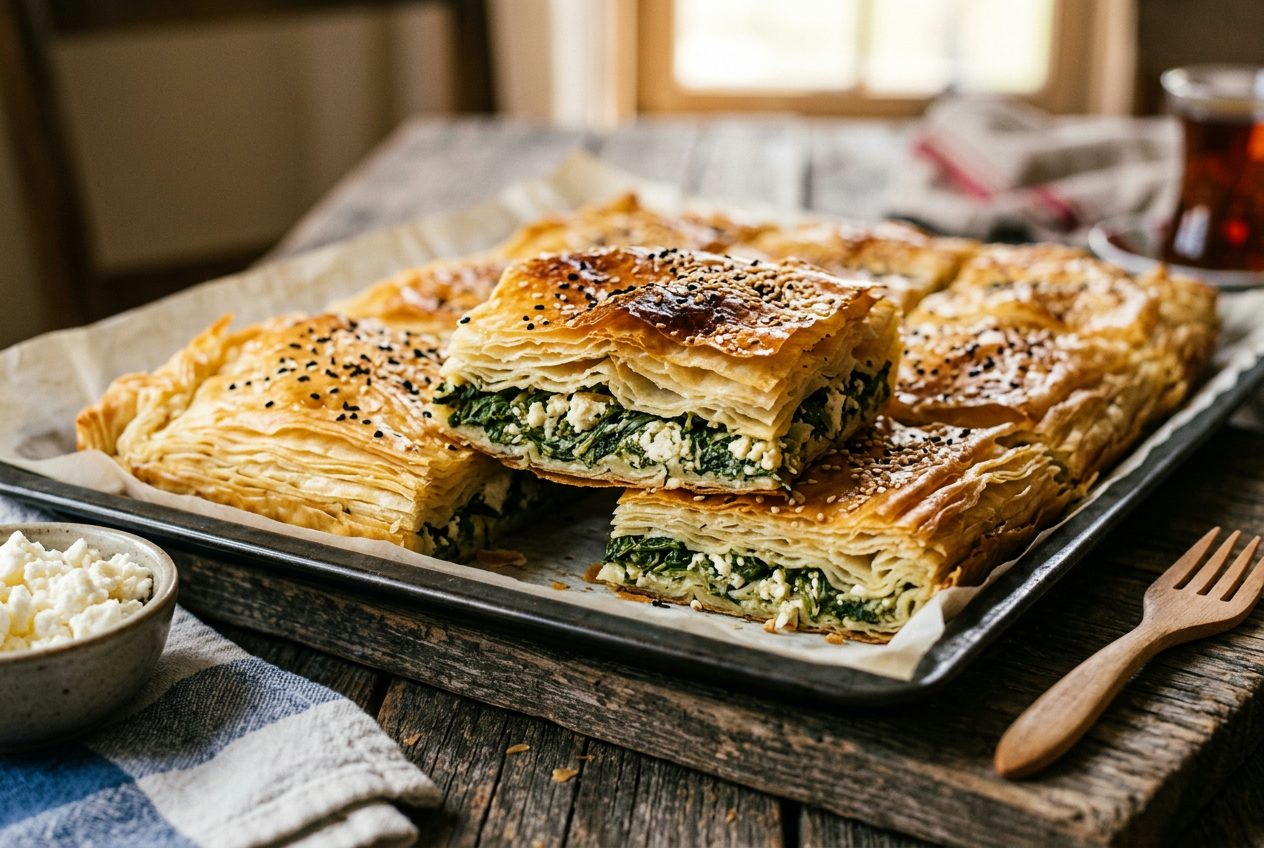
Ispanaklı Börek
Paper-thin yufka layered with wilted spinach and salty white cheese, baked until shattering-crisp — the definitive Turkish pastry.
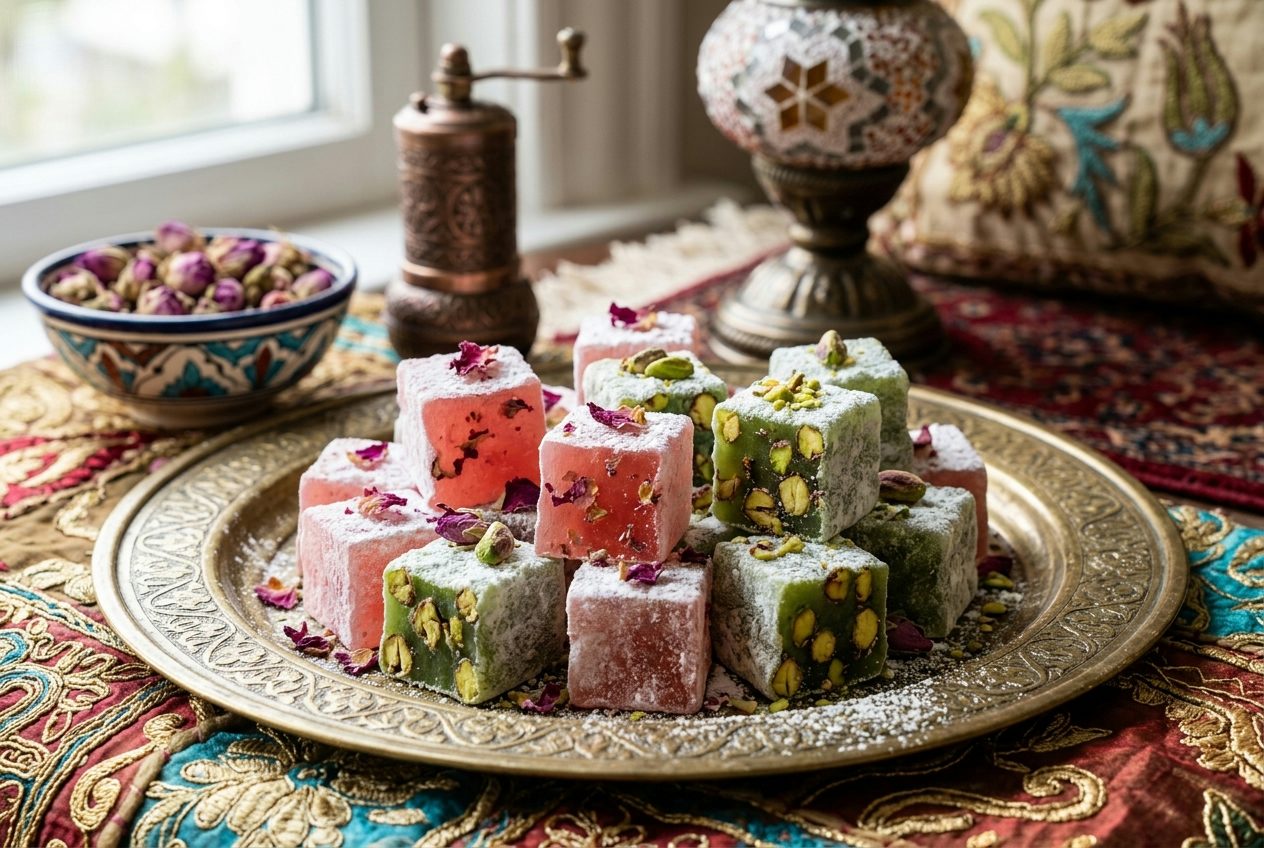
Gülsuylu Lokum
Jewel-like rose-water cubes of starch-set confection from Istanbul's oldest sweet shops — delicate, fragrant, and endlessly gifted.
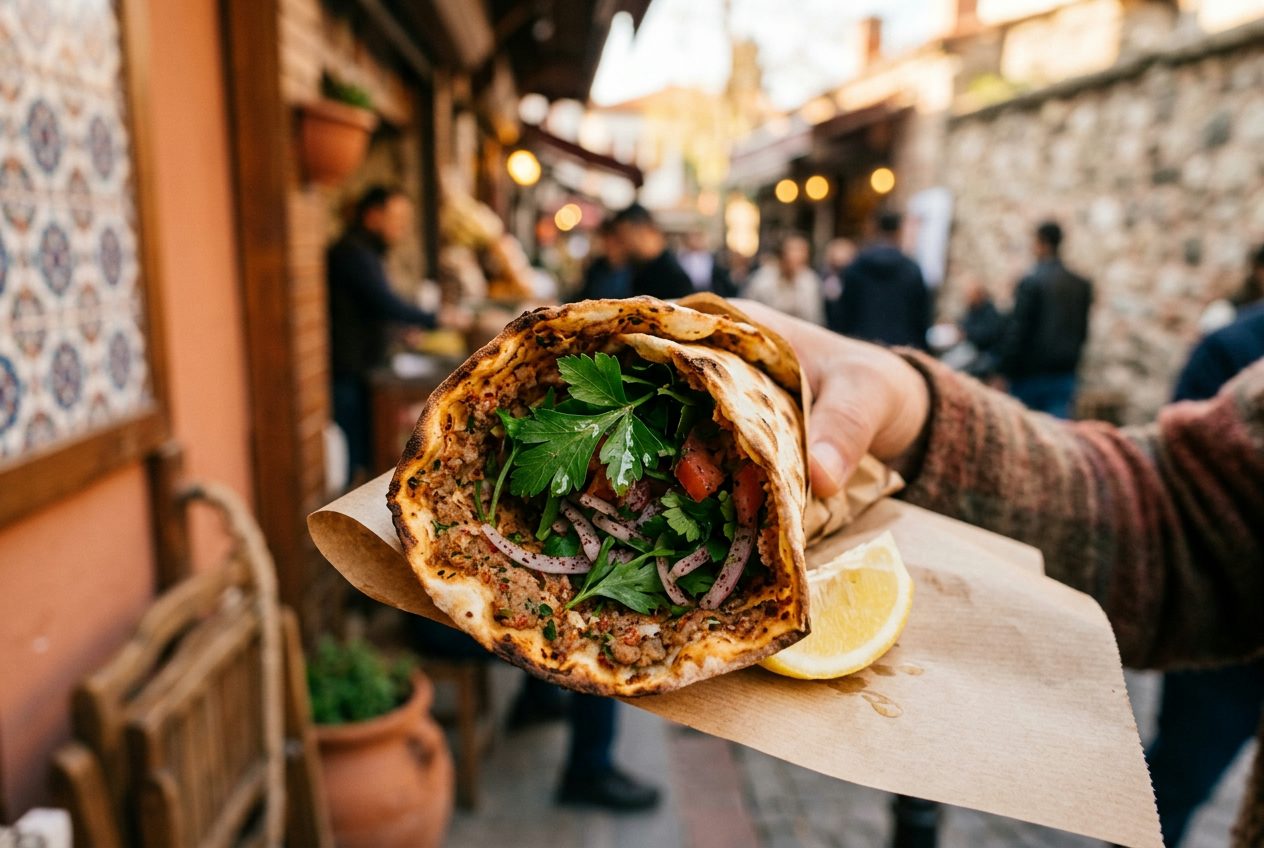
Urfa Lahmacunu
Ultra-thin crispy flatbread spread with spiced lamb and tomato paste, baked at furnace heat and rolled around fresh herbs and lemon.
Featured Recipe
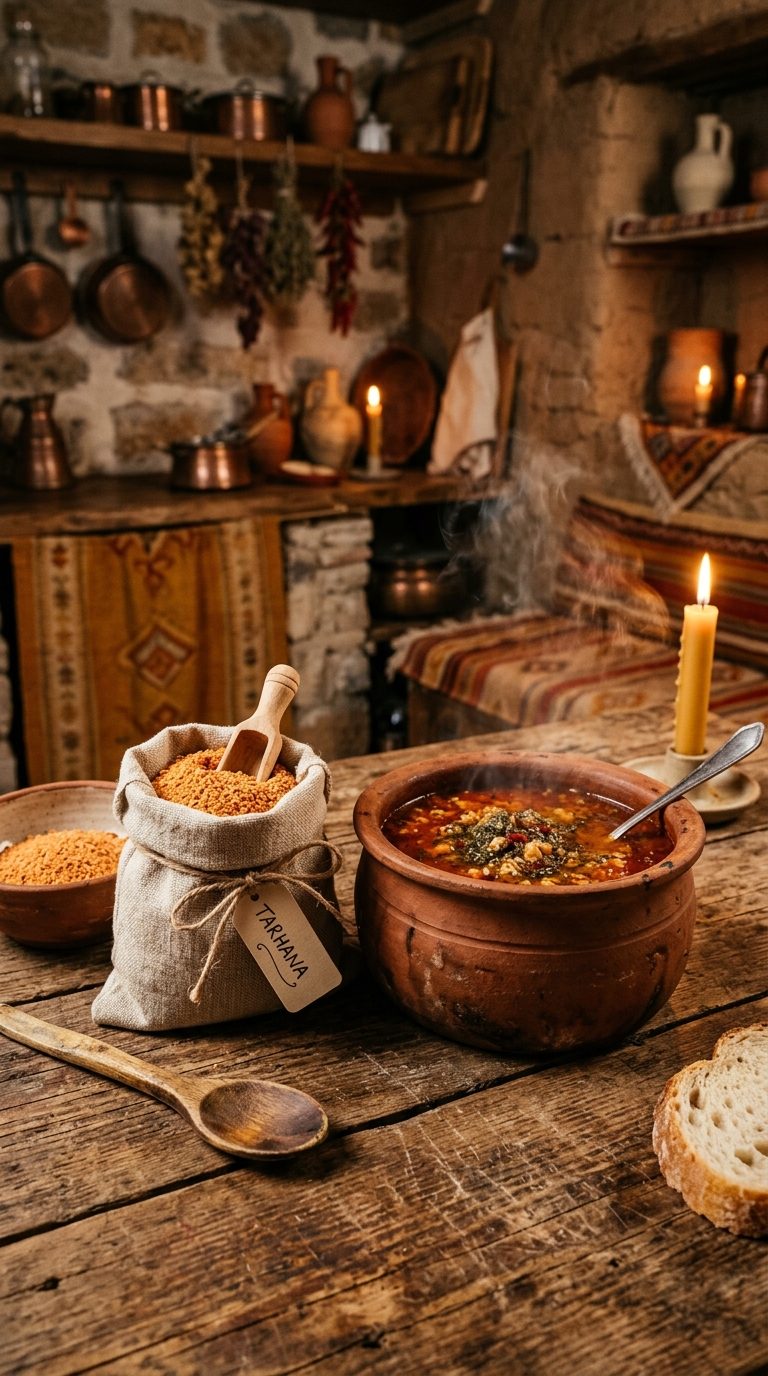
Tarhana: Turkey's Ancient Fermented Soup Mix
A tradition stretching back over a thousand years — made fresh, dried slowly, and stored for winter warmth.
Before There Were Grocery Stores, There Was Tarhana
Long before refrigeration, before tin cans, before the age of instant soups in foil packets, Anatolian families had tarhana. It is, at its heart, a preserved food — a fermented dough of wheat flour, yoghurt, tomatoes, red peppers, onions, and spices, shaped into small lumps or crumbled into a coarse powder, then dried slowly in the summer sun. Come winter, a handful dissolved in a pot of water would produce a soup that tasted of the whole warm season compressed into a bowl.
The word "tarhana" is believed to derive from the Persian "tarkhine" — evidence of just how ancient and far-reaching this fermentation tradition truly is. References to similar preparations appear in texts from the 10th century, and the technique spread across the Ottoman Empire in many regional variations. In Gaziantep it is made fiery with dried chillies; in the Aegean it might include dried mint and dried tomatoes. Every grandmother has her ratio; every family has its version stored in a hand-stitched cotton bag.
My own grandmother — Fatma Hanım — started her tarhana in August, working the dough each morning for five days, letting it ferment in a cool corner of the kitchen. The smell was sharp, yeasty, alive. By September the rolled pieces were laid on clean white cloths on the flat rooftop to dry in the sun. I remember the colour: a deep, burnt amber tinged with red. That smell and that colour are what I chase every time I make tarhana today.
This recipe is the full, unhurried version — the real thing, not a shortcut. It takes three days minimum. It rewards patience completely.
Authentic Turkish Recipes, Passed Down Through Generations — preserving the flavours and traditions of Anatolia, one dish at a time.
Contact Info
MUHAMMET FİLİZ
Recipe Author & Food Heritage Writer
Burnaz Caddesi No:31
34310 Avcılar / İstanbul
Türkiye- [email protected]
© 2026 MUHAMMET FİLİZ — All Rights Reserved.
Crafted with tradition & love in İstanbul, Türkiye